Book Appointment Now

Can a Humidifier Help Eczema?
Yes — a humidifier can help eczema by adding moisture to dry indoor air, which reduces skin water loss and soothes tight, itchy patches. Using the right humidifier and keeping humidity at a healthy level prevents excess dampness that could worsen skin or trigger mold. Warm-mist or cool-mist options work, but filter and clean the device regularly to avoid irritants. Run a humidifier in bedrooms during dry months and monitor with a hygrometer for 40–50% relative humidity. Combine humidification with gentle skincare for the best relief.
How Does a Humidifier Help Eczema?
Humidifying the air can give eczema-prone skin a little breathing room. Whenever you raise indoor moisture, your skin loses less water, so it can support barrier repair and feel less tight. That matters because a stronger barrier helps shield you from irritants that can spark an immune response.
You might notice less itching, less flaking, and fewer rough patches, especially during heat or dry weather pulls moisture from the air. Should your home feels dry, a humidifier can make your room feel kinder to your skin and easier to live in. Still, it works best as part of your eczema routine, alongside gentle cleansing and rich moisturizer. That way, you’re not fighting the dryness alone.
When Does Dry Air Make Eczema Worse?
Dry air can make eczema worse whenever your skin already feels stressed, cracked, or itchy.
During seasonal variation, you might notice more flare-ups in winter, whenever heaters strip moisture from the air and your skin loses it fast. You can also struggle indoors at work, where occupational exposure to low humidity, air conditioning, or heated rooms keeps your skin tight all day.
Should you already deal with rough patches on your hands, arms, or face, dry air can turn mild irritation into a stronger itch. That’s why your symptoms could feel louder at night or after long hours inside.
Whenever your skin barrier is already weak, even a small drop in moisture can leave you feeling less comfortable and more alone.
How to Choose a Humidifier for Eczema
Choose a humidifier that helps your skin without causing new problems. You want a cool-mist model that feels easy to live with, since you’ll use it in your room or a shared space. Look for a built-in humidistat, so you can keep moisture steady instead of guessing. Next, compare filter options, because some units need less upkeep and might fit your routine better. In case your home feels dry often, a larger tank can save you from constant refills. Also check warranty considerations, because a solid warranty can bring peace of mind when you’re already managing eczema stress. You deserve a setup that feels simple, reliable, and made for real life. Pick one that fits your space, your budget, and your need for comfort.
How to Use a Humidifier Safely for Eczema
To help your skin without making things worse, use your humidifier with a clear plan and a light touch. Keep the room at a steady, comfortable level, and watch seasonal maintenance so you don’t invite mold or dust mites. Your eczema care crew can feel this difference fast.
- Fill it with distilled water and empty it daily.
- Clean it weekly, just like you’d tidy a favorite hoodie.
- Aim for quiet models, because noise considerations matter during sleep.
- Check the air often and halt should windows sweat or the room feels heavy.
Use it alongside your creams and gentle washing, not instead of them. Whenever you keep the air calm and clean, you give your skin a better chance to settle down.
Where Should You Place a Humidifier?
Place your humidifier in the bedroom in case that’s where you spend most of your time, especially while you sleep.
You can also keep one in a main household room area so the air stays more comfortable during the day.
Just make sure it isn’t blowing mist right at you, since you want the moisture to spread gently through the room.
Bedroom Placement
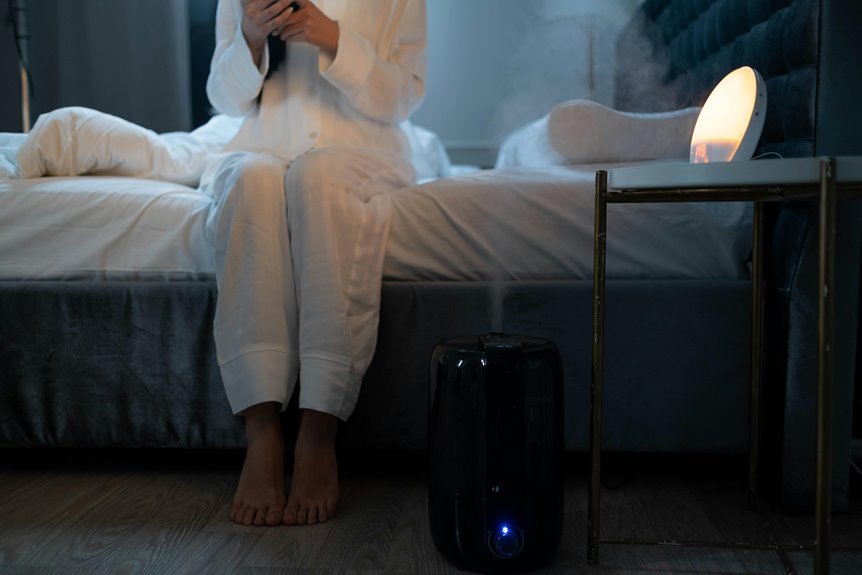
Whenever you use a humidifier for eczema, the bedroom is often the best spot because you spend many hours there while you sleep. That steady sleep humidity can help your skin feel less tight overnight, and it could make bedside timing work in your favor.
Place it near your bed, but not so close that mist hits your face or sheets. Try this setup:
- On a flat nightstand
- A few feet from your pillow
- Away from curtains
- In an open corner
You’ll breathe easier whenever the room feels balanced, and you’ll fit right in with a calmer bedtime routine. Keep the air gentle, not soggy. A cool-mist unit with clean water helps you protect your comfort while you rest.
Living Room Spots
Should your bedroom setup already helps you sleep more comfortably, the lounge can do the same during the rest of the day. Place your humidifier in a central communal room spot, where you spend time reading, talking, or relaxing with family. Keep it on a stable table or stand so the mist can spread evenly and your skin can get the moisture lift it needs. Stay clear of walls, curtains, and wood pieces, because extra dampness could lead to furniture damage.
In case you have carpet, set the unit higher to reduce carpet mildew. You can also choose a cool-mist model for easier daily use. Then check the room often, so the air feels comfortable, not sticky. That balance helps you feel at home, and your eczema might thank you.
Avoiding Direct Air
Keep the mist away from your face, because too much direct airflow can irritate already sensitive eczema skin. You’ll feel better whenever you use indirect positioning, so place the humidifier across the room or near a wall. That way, the moisture spreads gently instead of hitting your skin like a tiny indoor cloud.
- Set it on a stable nightstand.
- Aim it toward open space, not your pillow.
- Avoid drafts from vents or windows.
- Keep the room comfy, not damp.
Whenever you avoid drafts, you help the mist stay even and calm. In case you share the room, that softer setup can feel nicer for everyone, and it won’t turn bedtime into a sneezy, soggy drama. Check the air often, and adjust the spot should your skin feel too wet or too dry.
Other Ways to Soothe Eczema-Prone Skin
You can calm eczema-prone skin via keeping your routine gentle and simple. Use fragrance-free cleansers and rich moisturizers, and skip harsh scrubs that can make itching worse.
It also helps to notice your triggers, so you can avoid things like certain fabrics, hot water, and scented products that can set off flare-ups.
Gentle Skin Care
You can help your skin feel less alone by choosing fragrance free cleansers and barrier repairointments that protect instead of strip. Try this:
- Wash with lukewarm water.
- Pat dry with a soft towel.
- Smooth on cream right away.
- Reapply ointment prior to bed.
These small steps can turn a scratchy night into a gentler one.
Also, keep your routine steady, because your skin likes predictability more than drama. Whenever you treat it kindly, you give it space to recover, and that can make everyday comfort feel closer again.
Trigger Avoidance
Whenever eczema-prone skin feels angry, small daily triggers can turn a rough patch into a full flare. You can protect your skin through spotting what sets it off and cutting back early on.
Start with allergen control at home: wash bedding in hot water, vacuum often, and keep pets out of your bedroom provided dander bugs you. Next, watch your clothing choices. Soft cotton usually feels kinder than scratchy wool or stiff seams, so pick loose layers that let skin breathe. Fragrance can also sting, so choose unscented laundry soap and skip strong sprays.
Then notice sweat, stress, and sudden weather shifts, because they may join the party too. Whenever you trim these triggers, your skin gets more calm days, and you get more room to feel like yourself.
When Should You See a Doctor for Eczema?
- Image red patches racing up your arms.
- Image a damp bandage feeling on sore skin.
- Image tiny scabs that won’t quit.
- Image sleep slipping away night after night.
Frequently Asked Questions
Can a Humidifier Worsen Eczema Symptoms?
Yes, it can if you overhumidify, neglect device maintenance, or allow mold to build up. Maintain balanced air quality, clean the device regularly, and keep humidity at the right level so your skin stays calmer and not more irritated.
Is Warm Mist Safe for Eczema-Prone Skin?
Warm mist isn’t usually the safest choice for eczema prone skin; you’re better off with cool mist. Steam therapy can irritate sensitive skin, and warm tanks might enhance bacterial growth unless you clean and monitor them carefully.
How Long Should I Run a Humidifier Each Day?
Run it as long as your air stays dry, ideally overnight or for 8 to 12 hours. Keep humidity near 40 to 60 percent, and choose smart room placement for better skin hydration. Good grief, you will feel right at home.
Can a Humidifier Help Eczema in Summer?
Yes, a humidifier can still help your eczema in summer provided your air is dry, supporting skin hydration and easing itch. But if humidity is high, sweat irritation could worsen symptoms, so you will want balance.
Should I Use Distilled Water in My Humidifier?
Yes, you should use distilled water in your humidifier. You’ll avoid mineral buildup and reduce bacterial growth, keeping your room’s mist a cleaner, gentler rain for your skin. You’ll feel more at home, too.
